Last week, we play DrowGames; this week, we compete! This DrowGames fever is getting hotter and hotter.
Unfortunately, throughout the DrowGames online competition, we had problems with the Internet connection. Oh gosh, what a drag! The funniest part is once I get to play, I lose the first round. Haha...... the bright side is I get to go back early. Lalala...... Sounds like "sour grapes", I know. :p
Before I forget, congratulation Gee Oon Oon for winning the game. Well done!
Where does literature come from? Today’s lecture revolved around this topic.
Basically, traditional literature is a genre which includes poems, songs, riddles, etc, that have been passed down orally from one generation to another generation. Thus, the sources are usually unknown, so are the authors. The forms of traditional literature can be categorized into three, i.e. religious/cultural literature, folklore and folktales. However some do overlap.
Throughout the lesson, the two categories – folklore and folktale are rather confusing in their grouping. Folklore is considered the largest category of traditional literature, which includes folktales as one of the types of literature that are categorized under folklore. However, folktales can also be grouped as one of the three forms of traditional literature. In fact, folktales is the major form of traditional literature. Folktales consist of fairy tales, noodlehead stories, animal stories, trickster tales, cumulative tales and pourquoi tales. However, some of the new terms are unfamiliar to me.
All in all, there are many forms of traditional literature. Although some are lost with time, the remainder must not be neglected but treasured, as it reflects the history of literature that we are having today.
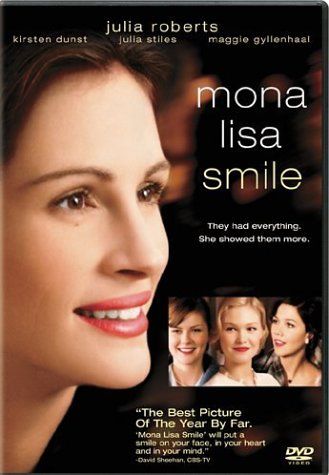
Today, we watched the first movie of EDU3234. In Dr Jayakaran’s class, it is sort of a custom to watch inspiring movies about teaching. Each movie lie hidden messages about what makes a great teacher, who does not only educate but also inspires. The movie we had watched was “Mona Lisa’s Smile”, starring Julia Roberts, Kirsten Dunst, Maggie Gyllenhaal, and Julia Stiles.
In brief, “Mona Lisa’s Smile” narrates about a modern teacher, Katherine Ann Watson (played by Julia Roberts), who tries to change the narrow mentality of the students in Wellesley College, “a conservative women's private liberal arts college in Massachusetts, United States in 1953” (Wikipedia.com). Watson uses liberal arts to liberate her students from conforming to female stereotypes. She emancipates students to believe that they can live more than just being wives and mothers. However, like in most societies, one is creating trouble when you fight against societal belief. Nevertheless, although she has to leave the college, she manages to create awareness about female oppression among her students. She inspires them to work for what they desire, fight for their rights and realize their dreams, regardless of female discrimination surrounding them, making them hard to breathe.
In addition, there are some teaching implications that can be found from the movie, “Mona Lisa’s Smile”. The identified teaching implications are as follow:
1. Do not fear of your students, for they can sense your fear and easily take that teacher presence and confidence from you. What if they threaten you? Watson taught us that we have to stand firm and make them respect you as their teacher. (Facing rude and daring students who are capable to beat us up, can we still hold on to our courage? I wonder.)
Katherine Watson: Since your wedding, you've missed six classes, a paper and your midterm.
Betty Warren: I was on my honeymoon and then I had to set up house. What does she expect?
Katherine Watson: Attendance.
Connie Baker: [timidly] Most of the faculty turn their heads when the married students miss a class or two.
Katherine Watson: Well then why not get married as freshman? That way you could graduate without actually ever stepping foot on campus.
Betty Warren: Don't disregard out traditions just because you're subversive.
Katherine Watson: Don't disrespect this class just because you're married.
Betty Warren: Don't disrespect me just because you're not.
Katherine Watson: Come to class, do the work, or I'll fail you.
Betty Warren: If you fail me, there will be consequences.
Katherine Watson: Are you threatening me?
Betty Warren: I'm educating you.
Katherine Watson: That's *my* job.
2. Teach students to think beyond the book knowledge. To enable them to think for themselves, instead of “book smart”.
Joan Brandwyn: You gave me a C.
Katherine Watson: I'm kind.
Joan Brandwyn: The assignment was to write about Bruegel. That's what I did.
Katherine Watson: No, what you did was copy Strauss.
Joan Brandwyn: I was referencing an expert.
Katherine Watson: If I wanted to know what he thought, I'd buy his book.
Betty Warren: I've heard her called a quitter for leaving and aimless wanderer. But not all who wander are aimless, especially those who seek truth beyond tradition, beyond definition, beyond the image. I'll never forget you.
3. Train students to be open-minded to receive new ideas and knowledge. It will help a great deal in their learning process, as they are more willing to accept the unknown and explore new ideas.
Katherine Watson: Look beyond the paint. Let us try to open our minds to a new idea.
4. Inspire students to be risk takers who dare to pursue their dreams, regardless of any obstacles ahead them, especially when family practice and societal custom are involved.
Katherine Watson: It says here that you're pre-law. What law school are you going to go to?
Joan Brandwyn: I hadn't really thought about that. After I graduate, I plan on getting married.
Katherine Watson: And then?
Joan Brandwyn: [confused] And then... I'll be married
Mona Lisa, Mona Lisa
Men have named you
You're so like the lady with the mystic smile
Is it only cause you're lonely
They have blamed you
For that Mona Lisa strangeness in your smile
Do you smile to tempt a lover, Mona Lisa
Or is this your way to hide a broken heart
Many dreams have been brought to your doorstep
They just lie there, and they die there
Are you warm, are you real, Mona Lisa
Or just a cold and lonely, lovely work of art
(Repeat)
Mona Lisa, Mona Lisa
Lyrics from theme song of the movie, “Mona Lisa’s Smile”.
Now, take a look at the infamous painting of “Mona Lisa Smile”. Look deep into her eyes. Was she really happy?
EDU 3234 is like no other courses. It is an adventure. Just a quick scan from the previous posts and you would notice that the activities were extraordinary, such as listening to songs and online DrowGames. Guess what had we done today?
In brief, we had an educational visit to an exhibition, namely, PRPI. For your information, PRPI is the abbreviation for “Pameran Rekacipta, Penyelidikan dan Inovasi”. Now, why PRPI?
In EDU 3234, every activity we had done has an underlying purpose behind it. In fact, self-exploration and self-realization are the basic essentials of the course. Apparently, the main reason of visiting PRPI is to learn from the experts, especially the researchers, on the research process.
Throughout the visit, we were exposed to different products of researches from science creation to agriculture. Moreover, we were allowed to ask questions to the participating researchers to enquire more about the knowledge and skills of conducting a research. Thus, it had been an eye-opening experience to us. We were learning from the experts who had done researches before, which would help us a great deal in our course EDU 3234: READINGS & PROJECT WORK FOR TEACHING LITERATUREIN ESL CONTEXT, where we are required to do a lot of readings and research on literature works.
For more information, kindly refer to http://u-events.upm.my/prpi/index.php?content=am .